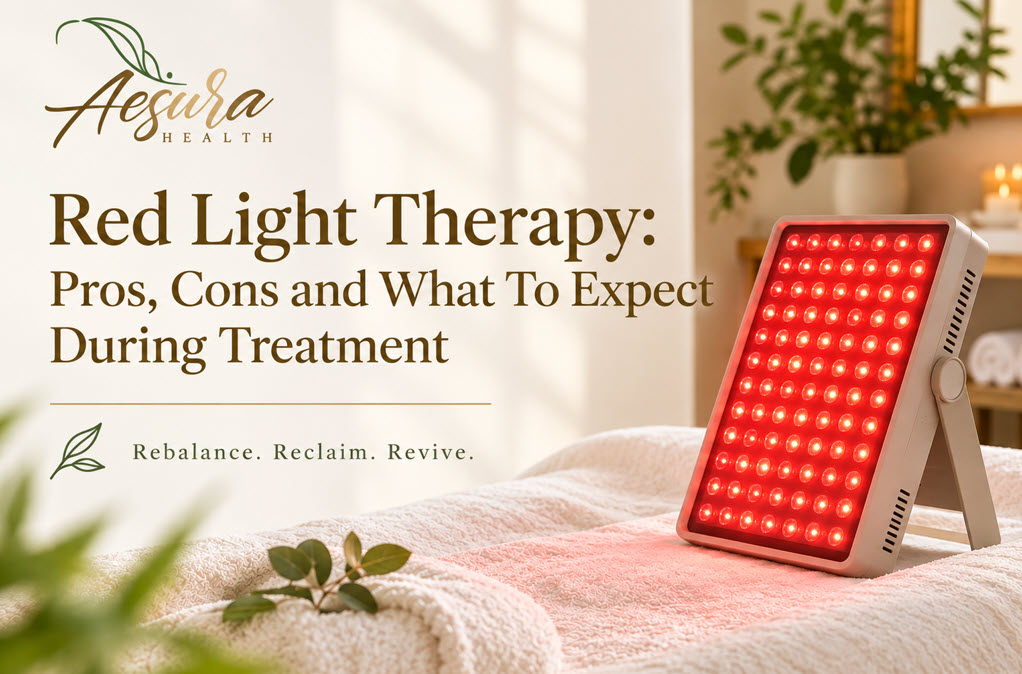
Also known as photobiomodulation (PBM), red light therapy delivers specific wavelengths of light, typically 630 to 660 nm for red light and 810 to 850 nm for near-infrared light, deep into your skin and underlying tissues. These distinct wavelengths penetrate the body and are absorbed by your mitochondria, the energy-producing engines inside your cells.
By stimulating the mitochondria, the therapy helps your cells produce more adenosine triphosphate (ATP), increasing your overall cellular energy and efficiency. This cascade of cellular energy reduces oxidative stress, increases circulation, and accelerates the body’s natural repair and recovery mechanisms.
This guide explains the potential benefits of red light therapy, the ideal patient profile, and compares it with other options for patients considering alternative treatments.
Wavelengths Used in Red Light Therapy
The specific wavelength of light, measured in nanometers (nm), determines how deeply the light penetrates your body’s tissues and which cellular processes it activates.
Shorter wavelengths in the visible red spectrum (600–700 nm) are quickly absorbed by the skin’s outer layers, making them ideal for cosmetic rejuvenation and surface healing. Longer wavelengths in the invisible near-infrared (NIR) spectrum (700–1100 nm) bypass the skin’s scattering effect to reach deep into muscles, connective tissues, joints, and even bone.
Because different wavelengths target different tissue depths, most clinical-grade devices combine multiple frequencies to deliver a comprehensive, full-body biological response.
Here is a breakdown of the specific wavelengths most commonly used and how they differ:
-
630 nm (Red Light)
Targets the upper epidermis and surface skin. It is potentially effective for reducing fine lines, improving skin texture, and managing superficial inflammation or psoriasis.
-
660 nm (Red Light)
Reaches the entire depth of the skin tissue (dermis). Often considered the sweet spot for anti-aging, it can stimulate fibroblast cells to help boost collagen production, potentially accelerate surface wound healing, and promote hair follicle stimulation.
-
810 nm (Near-Infrared Light)
Penetrates deeply enough to pass through the skull into neural tissue. It is heavily researched for transcranial photobiomodulation to support brain health, nerve repair, and neurological recovery.
-
830 nm (Near-Infrared Light)
Reaches deep dermal layers, connective tissue, and bone. Research suggests it can help reduce deep-seated inflammation, accelerate recovery from injuries, and assist in bone fracture healing.
-
850 nm (Near-Infrared Light)
The most common NIR wavelength for deep tissue repair. It penetrates up to 5 cm into the body, making it the premier choice for potentially alleviating joint pain, arthritis stiffness, and deep muscle soreness after intense exercise.
The Potential Benefits of Red Light Therapy
-
Accelerated Tissue Repair and Muscle Recovery
By boosting blood circulation and cellular energy, red light therapy can significantly speed up recovery after intense physical exertion or injuries.
-
Skin Rejuvenation and Anti-Aging
The specific wavelengths stimulate collagen production, which improves skin elasticity, enhances tone, and reduces the appearance of fine lines and wrinkles.
-
Reduced Inflammation and Joint Pain
Near-infrared wavelengths penetrate deep into joints and muscle tissue to lower inflammatory markers and relieve chronic pain.
-
Enhanced Systemic Wellness
Optimizing mitochondrial function leads to whole-body benefits, including improved sleep quality and elevated, sustained daytime energy levels.
Clinical Data and Studies on Red Light Therapy
Skin Rejuvenation and Collagen
A foundational study investigated polychromatic red and near-infrared light for skin health (Wunsch & Matuschka, 2014 – https://pmc.ncbi.nlm.nih.gov/
The results showed that treated subjects experienced significantly improved skin complexion, reduced surface roughness, and increased collagen density measured via ultrasound. These findings indicate that photobiomodulation safely stimulates cellular collagen production, suggesting it is a highly effective, non-invasive protocol for anti-aging and skin rejuvenation.
Joint Pain and Musculoskeletal Recovery
A recent clinical trial evaluated red light therapy for postoperative recovery following total knee arthroplasty (Bahrami et al., 2023 – https://pmc.ncbi.nlm.nih.gov/
This indicates that red light therapy can act as a powerful, non-pharmacological anti-inflammatory tool, potentially accelerating joint recovery and reducing reliance on traditional painkillers.
Muscle Performance and Recovery
A systematic review and meta-analysis investigated the effects of photobiomodulation on muscular fatigue (Borsa et al., 2013 – https://pubmed.ncbi.nlm.nih.
The data suggest red light therapy is a highly effective, non-invasive tool to enhance athletic performance, increase exercise capacity, and accelerate post-workout recovery.
What Is the Ideal Patient Profile for Red Light Therapy?
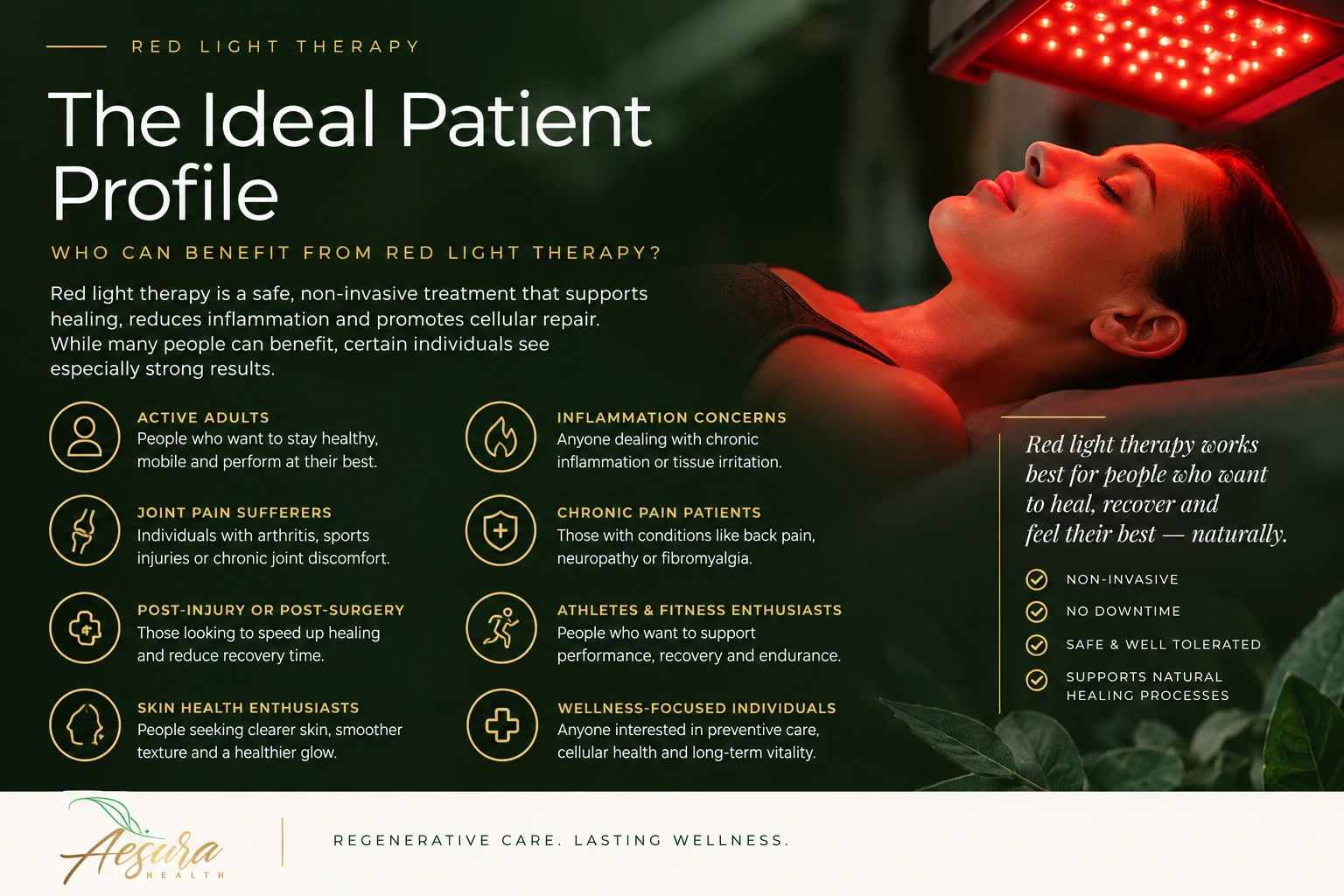
-
Entirely non-invasive and painless with zero required downtime.
-
Free from harmful UV rays; it does not tan, burn, or damage the skin.
-
Supported by hundreds of peer-reviewed clinical studies verifying its efficacy for skin health, inflammation, and recovery.
-
Highly complementary, meaning it can be easily stacked with other wellness treatments like cryotherapy or hyperbaric oxygen therapy.
Cons:
-
Requires a consistent cadence (often 3 to 5 times a week during the initial loading phase) to achieve optimal results.
-
Clinical-grade panels are necessary for therapeutic impact. Most cheap at-home devices lack the irradiance to deliver effective results in a reasonable session time.
-
Out of an abundance of caution due to limited research, it is generally not recommended for pregnant women without explicit clearance from an obstetrician.
What to Consider When Choosing a Red Light Therapy Clinic
Investing in red light therapy can be a transformative step for cellular health and recovery, but selecting the best local clinic is crucial. The efficacy of photobiomodulation depends heavily on the clinic’s technology and clinical expertise.
Before committing to a provider, evaluate the following five factors that separate the best red light therapy clinics.
-
Equipment Quality
Find clinics that offer medical-grade whole-body beds rather than low-power panels.
-
Specific Wavelengths
Ensure they provide validated frequencies like 660nm for skin and 850nm for deep healing.
-
Professional Guidance
Choose centers with medical oversight, customized treatment protocols, and safety controls.
-
Coverage Area
Check if they offer targeted spot treatments or full-body coverage for health goals.
-
Session Length
Optimal clinical sessions require fifteen minutes to produce the absolute best results.
Comparing Red Light Therapy With Other Treatment Options
|
Feature |
Red Light Therapy |
Whole-Body Cryotherapy |
Hyperbaric Oxygen Therapy (HBOT) |
Traditional Sauna |
|
Primary Mechanism |
Stimulates mitochondria using red and near-infrared light wavelengths |
Exposes the body to sub-zero temperatures to trigger vasoconstriction |
Delivers 100% oxygen under increased atmospheric pressure |
Uses ambient heat to elevate core body temperature and induce sweating |
|
Target Benefits |
Cellular energy (ATP), skin health, collagen production, joint pain relief |
Acute inflammation reduction, endorphin release, immediate muscle soreness relief |
Deep tissue oxygenation, advanced wound healing, cognitive support |
Detoxification, cardiovascular health conditioning, relaxation |
|
Session Duration |
10–20 minutes |
2–3 minutes |
60–90 minutes |
15–30 minutes |
|
Physical Sensation |
Warm, painless, and deeply relaxing |
Intense cold with slight tingling |
Ear popping (similar to airplane travel) and mild pressure |
Intense ambient heat and heavy sweating |
|
Required Downtime |
None; immediate return to normal activities |
None; immediate return to normal activities |
None; immediate return to normal activities |
Requires a cool-down period and hydration |
Book Clinical-Grade Red Light Therapy in New Jersey at Aesura Health
When it comes to red light therapy treatment results, the practitioner’s experience and wavelength accuracy dictate your outcome. At Aesura Health in Hackensack, NJ, we utilize full-body, commercial-grade red light technology to ensure you receive a highly effective, research-backed dose.
Whether your goal is to enhance athletic recovery, improve skin quality, or build a comprehensive longevity protocol, our clinical team provides biomarker-guided care tailored to your exact physiology.
Take the next step in optimizing your cellular health. Book your session or a complimentary consultation today, or call our medical office at (201) 983-2582 for direct answers to your red light therapy treatment questions.
Frequently Asked Questions About Red Light Therapy
How close do I need to stand to the light panel?
For clinical-grade panels, you typically stand or sit within 6 to 12 inches of the device to ensure maximum light absorption while remaining perfectly comfortable.
Will this treatment interfere with my current medications?
While generally safe, certain medications can increase your photosensitivity. Disclose all active prescriptions to your clinical provider before your sessions.
Do I need to wear protective eyewear?
Yes. While red light is not inherently dangerous to the eyes in the way UV light is, commercial-grade clinical panels are exceptionally bright, making protective eyewear highly recommended for your comfort.
Can I undergo a session if I have a tattoo?
Yes. The specific wavelengths utilized in photobiomodulation do not interact with, heat up, or degrade tattoo ink, making it completely safe to use over heavily tattooed skin.
Is it possible to overdo the light exposure?
Yes. Cellular light absorption operates on a biphasic dose response, meaning that exceeding the recommended time or frequency can actually diminish the mitochondrial benefits rather than compound them.
Should I apply serums or lotions before my session?
It is always best to expose clean, bare skin directly to the light. Heavy lotions, oils, or sunscreens can act as a barrier that prevents the wavelengths from effectively penetrating the tissue.
Does the light help with seasonal affective disorder (SAD)?
While optimizing your cellular energy can organically boost your systemic mood, SAD is traditionally and most effectively treated with bright white light therapy (10,000 lux) rather than red or near-infrared wavelengths.
What is the fundamental difference between red and near-infrared light?
Red light (typically 630-660 nm) primarily targets the surface of the skin to optimize collagen production and cosmetic appearance, while near-infrared light (810-850 nm) is invisible to the human eye and penetrates much deeper to target muscles, joints, and connective tissue.
Can I exercise immediately after my appointment?
Absolutely. There are zero physical restrictions following a session. In fact, many high-performing individuals utilize the light specifically as a pre-workout primer to boost muscle performance and blood flow.
Will the treatment cause me to lose weight directly?
It is not a direct, standalone weight-loss tool. However, by improving metabolic function, optimizing sleep architecture, and reducing post-exercise recovery times, red light therapy can support an overarching weight-loss regimen.