


Dark circles, puffiness, and under-eye hollowing are among the most common concerns we see at Aesura Health. The under-eye area ages faster than other parts of your face—the skin is thinner, there’s less fat to cushion it, and it shows fatigue, aging, and sun damage more obviously. For years, the go-to solution was under-eye filler. But in 2026, something is shifting. Practitioners and patients are increasingly turning to PRP for under-eye rejuvenation. Let’s explore why.
Why Under-Eye Skin Concerns Are So Common
The under-eye area faces unique challenges. The skin around the eyes is the thinnest on your face—roughly one-tenth the thickness of the skin on your cheeks. This thin, delicate tissue shows the effects of age, fatigue, and sun exposure more quickly than anywhere else.
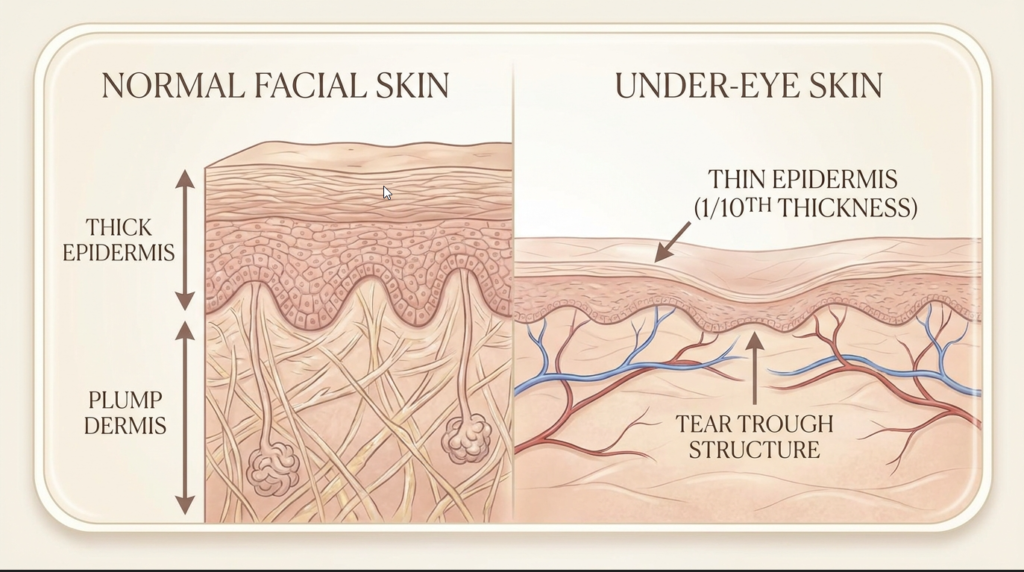
Several factors contribute to under-eye concerns:
- Genetics: Some people are prone to dark circles and fat pads under the eyes
- Volume loss: As you age, the under-eye fat pad naturally diminishes, creating a hollowed appearance
- Thin skin: Dilated blood vessels show through more easily, creating the appearance of darkness
- Lifestyle factors: Sleep deprivation, allergies, dehydration, and sun exposure all exacerbate the appearance
PRP for Under Eyes Vs. Hyaluronic Acid Fillers
| Feature | Platelet-Rich Plasma (PRP) | Hyaluronic Acid (HA) Fillers |
| Mechanism of Action | Stimulates your body’s natural collagen and elastin production using your own concentrated platelets. | Physically plumps the area by injecting a gel-like substance beneath the skin. |
| Immediate Results | No. Results are gradual, taking a few weeks to months as new collagen builds and tissue regenerates. | Yes. Instantly adds volume, diminishes hollowness, and lightens shadows. |
| Skin Quality | Excellent. Actively improves skin texture, thickness, and tone while treating dark circles at a cellular level. | Poor. Only adds underlying volume; does not improve the actual quality, texture, or pigmentation of the skin. |
| Risk of Tyndall Effect | Zero. Because it is your own plasma, there is no risk of the blue-gray tint showing through the skin. | Moderate to High. The delicate under-eye skin can easily reveal the filler beneath, causing a blue-gray discoloration. |
| Risk of Migration or Puffiness | Zero. PRP integrates completely into your tissue and cannot migrate or cause synthetic puffiness. | High. Filler can migrate with facial expressions or hold onto water, creating a puffy or unnatural appearance. |
| Longevity | Long-lasting. Once collagen is built, results typically last 1 to 2 years (often requires an initial series of 3 treatments). | Temporary. The body naturally metabolizes the filler, requiring retreatments every 6 to 12 months. |
| Safety Profile | Highly Safe. Uses 100% natural material from your own body, eliminating the risk of allergic reactions or rejection. | Generally Safe, but riskier. Carries risks of allergic reactions, vascular occlusion (blockage of a blood vessel), and lumps. |
For many years, hyaluronic acid fillers were the standard treatment. Inject filler under the eyes, and you immediately have more volume. The hollowness diminishes, shadows lighten, and the area looks more awake.
But under-eye filler comes with real limitations. The under-eye area is delicate and highly visible. A few things can go wrong. Too much filler or improper placement can cause puffiness or a “yuggy” appearance. The Tyndall effect—where filler shows through as a blue-gray tint—can happen. Filler can migrate slightly, especially when you’re moving and expressing. And the results don’t last: most under-eye fillers require retreat every 6 to 12 months.
For these reasons, many patients and providers are looking for alternatives.
How PRP Works for Under-Eye Rejuvenation
PRP stands for platelet-rich plasma. It’s derived from your own blood and contains growth factors and healing proteins that your body naturally uses to repair and regenerate tissue.
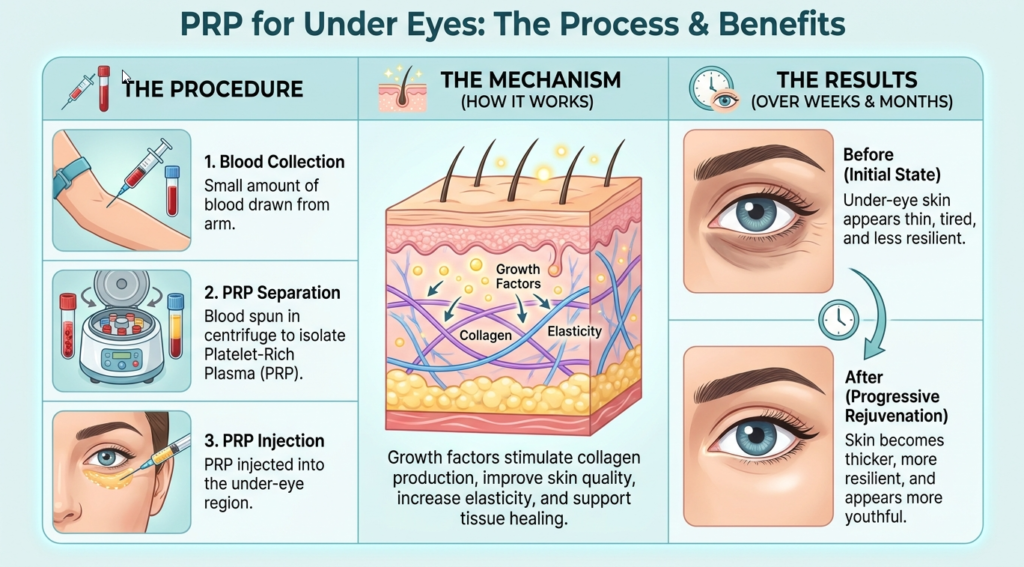
Here’s the process: we draw a small amount of your blood, spin it in a centrifuge to separate the platelet-rich portion, and then inject that PRP into the under-eye area. The growth factors in PRP stimulate collagen production, improve skin quality, increase elasticity, and support the tissue’s own healing response. Over weeks and months, the skin under your eyes becomes thicker, more resilient, and more youthful.
This regenerative approach addresses the root problem: thin, aging skin. Instead of just adding volume temporarily, you’re rebuilding the tissue itself.
PRF and EZGel: An Evolution of PRP
PRP technology has evolved. PRF (platelet-rich fibrin) is a more advanced version that concentrates even more growth factors and includes fibrin, which acts as a natural scaffolding for new tissue. EZGel is a specific formulation that creates a gel-like consistency, making it easier to inject and keeping it in place longer.
At Aesura Health, we use these advanced formulations for enhanced results. PRF EZGel under the eyes provides deeper regeneration, better retention, and more dramatic improvement in skin quality.
What to Expect from PRP Under-Eye Treatment
Sessions and Timeline:
Most under-eye PRP treatments involve 2 to 3 sessions spaced 4 to 6 weeks apart. You’ll start seeing changes within the first few weeks, with continued improvement over 3 to 6 months as collagen rebuilds.
Recovery:
PRP has minimal downtime. You may see slight redness or mild swelling immediately after injection, but most people return to normal activities right away. Some mild bruising can occur, which resolves within a few days.
Maintenance:
Unlike filler, PRP results are self-sustaining. Once you’ve completed your initial series, annual maintenance sessions can extend the benefits. Many patients find they need fewer treatments overall compared to fillers.
Who’s a Good Candidate for Under-Eye PRP?
PRP under-eye treatment works well for most people concerned with:
- Dark circles and discoloration
- Under-eye bags or mild swelling
- Hollowing or volume loss under the eyes
- Fine lines or thin, crepey skin in the under-eye area
- Anyone wanting to avoid filler or seeking a regenerative approach
Essentially, if you want to improve the quality and appearance of the skin around your eyes without filler, PRP is a strong option.
Aesura Health’s Regenerative Approach for New Jersey

At Aesura Health in Hackensack, we believe in working with your body’s natural healing capacity. PRP under the eyes is part of our larger regenerative aesthetics philosophy. Depending on your specific concerns and goals, we may recommend:
- PRP or PRF EZGel for tissue regeneration and skin quality
- Microneedling with PRP to enhance collagen induction
- Polynucleotides for additional cellular regeneration
- Strategic use of dermal filler in specific areas, if needed, paired with regenerative treatments
The key is customization. Your under-eye concerns are unique, and so is your treatment plan.
Why PRP Is Emerging as the Go-To Solution
The shift toward PRP for under-eye rejuvenation reflects a broader change in aesthetic medicine. Practitioners and patients are asking: Why add a foreign material when we can stimulate your body to regenerate itself?
PRP answers that question. It’s natural, it harnesses your own healing power, and the results feel subtle and organic. You look like yourself—just more rested and refreshed. And because it’s rebuilding tissue rather than just sitting there like filler, the benefits feel more sustainable.
Ready to Explore PRP for Your Under-Eyes?
If dark circles, bags, or under-eye hollowing have been bothering you, PRP might be exactly what you’ve been looking for. Schedule a consultation at Aesura Health in Hackensack to learn more about how PRP, PRF EZGel, and our regenerative approach can help you look and feel more refreshed.
Your best self is waiting. Let’s get you there.
Ready to Refresh Your Eyes with PRP? Schedule your consultation at aesura.janeapp.com today.
