


Chronic pain, joint degeneration, and lingering sports injuries can severely limit your quality of life. For decades, the standard answers were long-term pain medication regimens or invasive orthopedic surgeries. Today, regenerative medicine has opened the door to a more natural, powerful alternative: stem cell therapy.
By harnessing the body’s innate ability to heal and repair itself, stem cell therapy is transforming the way we treat orthopedic conditions, soft tissue injuries, and degenerative diseases. Whether you are dealing with chronic knee arthritis, a torn rotator cuff, or persistent back pain, this guide will walk you through everything you need to know about stem cell therapy, how it works, and whether it’s the right choice for your health journey.
What is Stem Cell Therapy?
Stem cell therapy is a groundbreaking field of regenerative medicine. It involves using stem cells, the body’s master cells, to repair diseased, dysfunctional, or injured tissue.
Unlike conventional treatments that primarily mask symptoms (like corticosteroid injections for pain relief), stem cell therapy addresses the root cause of the problem. When introduced into an injured area, these cells get to work reducing inflammation, modulating the immune system, and actively promoting the regeneration of healthy tissue.
Understanding the Types of Stem Cells
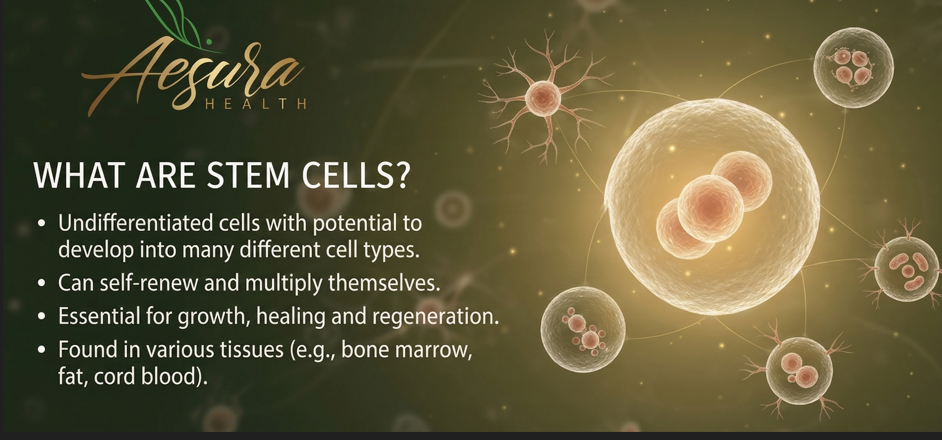
Not all stem cells are the same. They are categorized based on their origin and their ability to differentiate into other cell types. The following stem cells and regenerative therapies are most commonly used in orthopedic and regenerative treatments at Aesura Health
- Growth Factor Plasma Injections While not a stem cell therapy itself, Growth Factor Plasma (PRP) is often used alongside stem cell treatments to enhance and accelerate the healing process.”They are “acellular,” meaning they are not living cells themselves, but rather specialized messengers that instruct surrounding cells on how to behave. They are highly valued for their ability to accelerate tissue repair, stimulate new blood vessel formation, reduce inflammation, and support the vital signaling network that directs the body’s stem cells to heal damaged areas.
- Exosomes: Exosomes are tiny extracellular vesicles secreted by MSCs derived from bone marrow, placental tissue, and amniotic membrane. They are the “messengers” that stem cells use to communicate. Exosomes carry vital genetic information, proteins, and growth factors to target cells, instructing them to regenerate and reduce inflammation. Because they are acellular, exosome therapy can offer the regenerative power of MSCs with a potentially much lower risk of immune rejection and no risk of cellular mutation.
- Mesenchymal Stem Cells (MSCs): These are the most commonly used cells in orthopedic and regenerative therapies today. MSCs are adult stem cells found in bone marrow, fat (adipose tissue), and umbilical cord tissue. They are “multipotent,” meaning they can differentiate into bone, cartilage, muscle, and fat cells. They are highly valued for their anti-inflammatory properties and ability to signal the body’s natural healing mechanisms.
- Hematopoietic Stem Cells (HSCs): Found primarily in the bone marrow and umbilical cord blood, these cells differentiate into various blood cells (red blood cells, white blood cells, platelets). They are most often used in treatments for blood disorders like leukemia, rather than for orthopedic or tissue repair.
- Embryonic Stem Cells (ESCs): These are derived from early-stage embryos and are “pluripotent,” meaning they can become almost any cell type in the body. While they hold massive potential for research, their use in clinical practice is highly restricted and controversial, and they are not typically used in standard regenerative clinics.
- Induced Pluripotent Stem Cells (iPSCs): These are adult cells (like skin or blood cells) that have been genetically reprogrammed in a lab to behave like embryonic stem cells. They represent a major frontier in medical research but are largely still in the clinical trial phase for most conditions.
Stem Cell Types Summary
| Therapy / Cell Type | Primary Sources | Potency / Cellular Nature | Clinical Status & Primary Uses | Key Characteristics |
| Growth Factor Plasma Injections | The patient’s own blood | Acellular (Signaling proteins) | Widely used for joints, tendons, skin rejuvenation, and wound healing. | Concentrates the body’s natural healing factors to accelerate repair without using stem cells. |
| Stem Cell Exosome Therapy | Secreted by MSCs derived from bone marrow, placental tissue, and amniotic membrane | Acellular (Vesicles/Nanoparticles) | Rapidly growing field for tissue repair, systemic inflammation, and anti-aging. | Delivers the signaling power of stem cells (RNA, proteins) without the risks associated with live cell transplantation. |
| Mesenchymal Stem Cells (MSCs) | Bone marrow, fat (adipose), umbilical cord tissue | Multipotent (Can become bone, cartilage, muscle, fat) | Most commonly used today for orthopedic and regenerative therapies. | Highly valued for anti-inflammatory properties and triggering natural healing. Primary source of therapeutic exosomes. |
Other stem cell types — including Hematopoietic Stem Cells (HSCs), Embryonic Stem Cells (ESCs), and Induced Pluripotent Stem Cells (iPSCs) — exist and are subject of ongoing research. However, they are not typically used in clinical regenerative or orthopedic practice and are not offered at Aesura Health
The Potentially Life-Changing Benefits of Stem Cell Therapy
Patients who turn to regenerative medicine can experience a wide array of benefits, particularly when compared to traditional, invasive interventions.
1. Natural Pain Relief and Reduced Inflammation
Stem cells release powerful anti-inflammatory proteins (cytokines) into the affected joint or tissue. This drastically reduces the inflammation that causes chronic pain, providing relief without the need for long-term reliance on opioids or NSAIDs.
2. Accelerated Healing and Tissue Regeneration
Rather than just putting a “Band-Aid” on the injury, stem cells actively recruit other healing factors (like growth factors) to the injury site. This promotes the rebuilding of damaged cartilage, tendons, and ligaments, leading to a stronger, more stable joint.
3. Minimally Invasive with Minimal Downtime
Most stem cell treatments are performed as outpatient procedures via targeted injections (often guided by ultrasound or fluoroscopy for pinpoint accuracy). Patients can typically walk out of the clinic the same day and resume light activities shortly after, avoiding the weeks or months of bed rest and physical therapy required after major surgery.
4. Reduced Risk of Complications
Because the procedure is an injection rather than a surgical incision, the risks of blood clots, severe infection, and anesthesia-related complications are drastically reduced. Furthermore, when using your own autologous stem cells (harvested from your bone marrow or fat), the risk of tissue rejection is virtually zero.
What the Studies Say: The Science Behind Stem Cell Treatments
The efficacy of stem cell therapy is backed by a rapidly growing body of clinical research. While it is not a “magic cure-all,” studies consistently show its high potential for specific conditions:
- Osteoarthritis (OA): A multitude of studies have evaluated the use of Mesenchymal Stem Cells (MSCs) for knee osteoarthritis. Research published in the Journal of Translational Medicine has shown that intra-articular injections of MSCs can significantly reduce pain, improve joint function, and, in some cases, increase cartilage volume in OA patients.
- Tendon and Ligament Injuries: Soft tissue injuries, such as partial rotator cuff tears or Achilles tendinopathy, often have poor blood supply, making them slow to heal. Clinical studies such as this randomized prospective clinical trial published in the Orthopaedic Journal of Sports Medicine (Usuelli et al., 2016) demonstrated that treatment of Achilles tendinopathy with autologous adipose-derived stromal vascular fraction nih can accelerate tissue remodeling and improve structural integrity of the tendon.
- Spinal Disc Degeneration: A 2025 clinical study published in the Frontiers in Cell and Developmental Biology journal found that stem cell injections can help increase disc height, improve water retention, and help rebuild disc structure.
Disclaimer: It is important to note that while research is incredibly promising, regenerative medicine is an evolving field. Outcomes can vary based on the patient’s age, the severity of the condition, and the specific protocol used.
Stem Cell Therapy vs. Traditional Surgical Care
When facing a severe joint issue or chronic pain, patients are often forced to choose between regenerative medicine and traditional surgery (like a total joint replacement or arthroscopy). Here is how they compare:
| Feature | Stem Cell Therapy | Traditional Surgical Care |
| Approach | Minimally invasive injection stimulates the body’s natural healing. | Invasive; involves cutting, removing, or replacing tissue/bone. |
| Anesthesia | Local anesthesia (sometimes mild sedation). | General or regional anesthesia is required. |
| Downtime | Minimal. Patients typically return to normal daily activities within days to weeks. | Extensive. Often requires weeks of limited mobility and months of rigorous physical therapy. |
| Pain Level (Post-Procedure) | Mild to moderate soreness at the injection site for a few days. | Significant post-operative pain requiring prescription medication. |
| Complication Risks | Very low (minimal risk of infection or bleeding). | Higher (risks include blood clots, severe infection, anesthesia complications, hardware failure). |
| Goal | Tissue repair, reduced inflammation, and pain elimination. | Structural correction, symptom relief, often via artificial implants. |
Frequently Asked Questions About Stem Cell Therapy
How long does it take to see results from stem cell therapy?
Because stem cell therapy relies on your body’s natural biological healing processes, results are not instantaneous. Most patients begin to notice a reduction in pain and improved mobility within 4 to 6 weeks, with continuous improvement unfolding over the following 3 to 6 months as the tissue regenerates.
Is the stem cell procedure painful?
The procedure is generally well-tolerated. Local anesthetics are used to numb the injection site. If stem cells are being harvested from your bone marrow or adipose tissue, you may experience some soreness in that area for a few days, similar to a deep bruise.
Am I a good candidate for stem cell therapy?
Ideal candidates are typically those suffering from mild to moderate osteoarthritis, partial tendon or ligament tears, or chronic joint pain who have not found relief from conservative treatments (like physical therapy or rest). However, those with severe bone-on-bone arthritis or active systemic cancers may not be suitable candidates. A thorough consultation is required to determine eligibility.
How many treatments will I need?
For many orthopedic conditions, a single, highly concentrated stem cell treatment is sufficient to achieve significant and long-lasting relief. In some cases, depending on the severity of the injury, a doctor may recommend a follow-up “booster” treatment, such as Platelet-Rich Plasma (PRP), to further stimulate the healing process.
Are the stem cell treatment results permanent?
While stem cell therapy can fundamentally repair damaged tissue and halt the progression of degeneration, it cannot stop the natural aging process. Many patients experience relief that lasts for several years. Maintaining a healthy lifestyle, managing your weight, and engaging in physical therapy can help prolong the results.
Experience the Future of Regenerative Treatments with Aesura Health
Living with chronic pain is exhausting, but surgery doesn’t have to be your only option. At Aesura Health in Hackensack, New Jersey, we are committed to helping you reclaim your active lifestyle through the power of advanced regenerative medicine.
Our board-certified physicians bring specialized expertise in advanced stem cell treatments, regenerative therapies, and non-surgical pain management. We don’t just treat symptoms; we take a personalized, comprehensive approach to diagnose the root cause of your pain and design a customized healing protocol tailored specifically to your body.
Don’t let joint pain dictate your life any longer.Contact Aesura Health today to schedule your comprehensive stem cell consultation and take the first step toward a pain-free future.
